Can Tailgate Trucks Handle Pallets Safely?
Can tailgate trucks handle pallets? Learn how lift capacity, pallet dimensions, site access and cold-chain controls shape a safe, reliable freight booking.
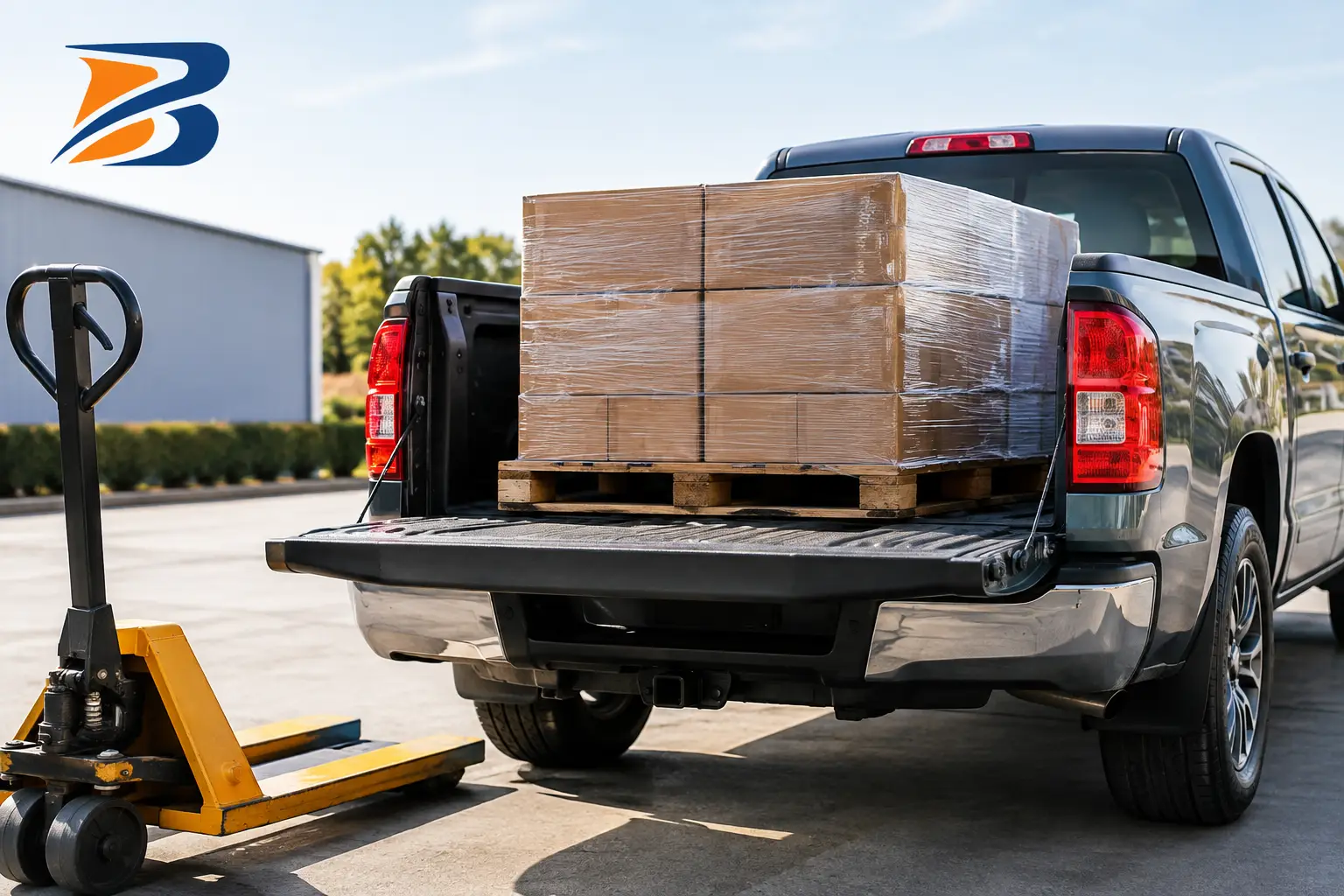
A pallet delivery can look straightforward on a booking form, then become difficult at the delivery point. There may be no loading dock, no forklift available, a narrow receiving area, or a strict temperature window for chilled or frozen stock. So, can tailgate trucks handle pallets? In many cases, yes. A properly specified tailgate truck is designed to load and unload palletised freight at ground level, but the pallet, the site and the equipment must all be suitable.
For food and temperature-controlled freight, this is more than a loading question. Safe pallet handling helps protect product condition, maintain delivery schedules and avoid costly delays at the receiver’s premises.
Can tailgate trucks handle pallets from ground level?
A tailgate truck uses a hydraulic platform, often called a tail lift, to raise or lower freight between the truck floor and the ground. The driver positions the pallet on the platform, lifts or lowers it, and moves it with suitable handling equipment such as a pallet jack.
This makes tailgate-equipped trucks particularly useful where a site does not have a dock leveller, forklift or other mechanical unloading equipment. It is a practical option for businesses receiving regular palletised stock in locations with ground-level access.
However, a tailgate is not an automatic solution for every pallet. The lift needs enough rated capacity for the load, the pallet must be stable, and the driver needs safe space to operate. A booking should always describe the freight and the delivery conditions accurately, rather than simplyrequesting a tailgateas an add-on.
What determines whether a pallet can go on a tailgate?
The total weight is the first consideration. Tail lifts have specific safe working load limits, which vary by vehicle and equipment configuration. The relevant figure is the combined weight of the pallet, product, wrapping and any other packaging. A pallet that is acceptable for a forklift may still be unsuitable for a particular tail lift if it exceeds that lift’s capacity.
Weight distribution matters as well. A pallet with a low, even centre of gravity is generally safer to handle than one stacked high or loaded unevenly. Top-heavy cartons, loose layers and damaged pallets can shift during lifting, particularly when the platform transitions between the truck bed and the ground.
Pallet size also affects the job. The full pallet must fit securely on the lift platform with appropriate clearance. Oversized freight, long pallets or loads with product overhanging the pallet can create handling risks. For refrigerated freight, keeping the product contained and protected during each movement is especially important.
The condition of the pallet should not be overlooked. Broken boards, protruding nails, wet cardboard, poor stretch-wrap or an unstable stack can turn a routine unload into a safety issue. Freight needs to be fit for transport and handling before it reaches the truck.
Site access can decide the job
Even when the pallet is within the tail lift’s capacity, the delivery site may not be suitable. A tailgate requires a reasonably level, firm and clear area at the rear of the vehicle. Uneven ground, steep driveways, loose gravel, standing water and restricted space can make a pallet unload unsafe.
The driver also needs room to park, lower the platform and manoeuvre the pallet jack. Tight laneways, busy loading areas and vehicles blocking the access point can delay the delivery. If the receiving point is inside a building, the route from the truck to the storage area must be wide enough, level enough and free from obstructions.
Kerbs, steps and raised thresholds are common issues. A standard pallet jack cannot safely take a loaded pallet up steps or across substantial level changes. Where the final placement point is above ground level, a loading dock, forklift or another suitable arrangement may be required.
For operations teams, the best approach is to assess the site before the first delivery. A few accurate details at quote stage can prevent failed deliveries, waiting time and unnecessary handling.
Temperature-controlled pallets need tighter planning
Chilled and frozen products cannot be treated like general freight. Every transfer outside the temperature-controlled vehicle needs to be controlled, efficient and appropriate for the product. The objective is to minimise exposure while maintaining safe handling practices.
A tailgate truck can support this process by allowing direct unloading where there is no dock. But a clear receiving plan remains essential. The receiving team should be ready to accept the pallet, with access clear and cold storage available. Leaving chilled or frozen freight waiting while a space is made available creates avoidable pressure on the delivery window.
Accuratetemperature monitoring, clean equipment and trained drivers form part of the broader cold-chain process. For food freight, packaging integrity and hygiene also matter. Damaged wrap or product that has shifted on the pallet should be addressed immediately, rather than moved further into the supply chain.
This is why tailgate capability should be considered alongside the vehicle’s temperature-control specification, not separately from it. The right vehicle needs to protect product in transit and enable a safe, timely handover at the destination.
Information to provide when booking pallet freight
Clear booking information helps a carrier allocate the right truck and avoids assumptions at collection or delivery. For a tailgate pallet job, provide thepallet count, dimensionsand gross weight for each pallet. State whether the load is ambient, chilled or frozen, along with the required temperature range.
It is also useful to explain whether a forklift or dock is available at both ends. If neither site has unloading equipment, confirm that ground-level tailgate delivery is required. Include any restricted access, height limits, booking times, site induction requirements or after-hours arrangements.
Photos can be helpful for unusual sites or freight, but they do not replace accurate measurements and a clear written description. If a pallet is unusually tall, heavy, fragile or irregularly shaped, declare it before transport is booked. This gives the carrier a chance to confirm a safe handling method or recommend a different vehicle arrangement.
Common situations where a tailgate may not be enough
A tailgate is highly useful, but it has practical limits. Very heavy pallets may require a vehicle with greater lifting capacity or a forklift at the destination. Freight that cannot be moved with a pallet jack, including some double-stacked or irregular loads, may need specialised handling.
A tailgate may also be unsuitable where the delivery surface is steep, soft or uneven, or where the vehicle cannot park close enough to the receiving area. In these cases, forcing the delivery through creates risk for the driver, staff, product and property.
There are also occasions when a pallet can be safely lowered to the ground but cannot be moved into its final position without site equipment. This should be identified before dispatch. A carrier can manage the transport and ground-level unload, but the receiver may need to arrange final internal movement.
Safe loading protects the whole delivery
Pallets should be loaded and restrained so they remain stable during transport and can be unloaded in the correct order. Heavy stock should be properly supported, stretch-wrapped where needed, and kept within the pallet footprint. Labels and consignment details should be visible without requiring staff to break down the load.
Inside the vehicle, freight restraint is critical. Braking, cornering and road conditions can shift an unsecured pallet, even over a short distance. Professional handling includes checking load security before departure and again where required during the run.
At delivery, the driver should have a clear, safe work area and the receiver should be prepared for the handover. This is particularly important for time-critical food freight, where delays affect both service performance and product protection.
For Brisbane and South East Queensland businesses moving chilled, frozen or dry pallet freight, a tailgate-equipped truck can be a dependable answer where dock access is not available. The key is matching the vehicle and tail lift to the real load and site conditions. Provide complete freight details early, confirm the access arrangements, and make sure the receiving team is ready when the truck arrives.
NEED TEMPERATURE-CONTROLLED TRANSPORT?
Talk to BFC about your freight, delivery window and temperature requirements.
Request a quote