
A Brisbane Seafood Freight Example That Holds Temp
See a Brisbane seafood freight example, from pickup checks to delivery, and learn how monitored cold transport protects quality, timing and compliance.
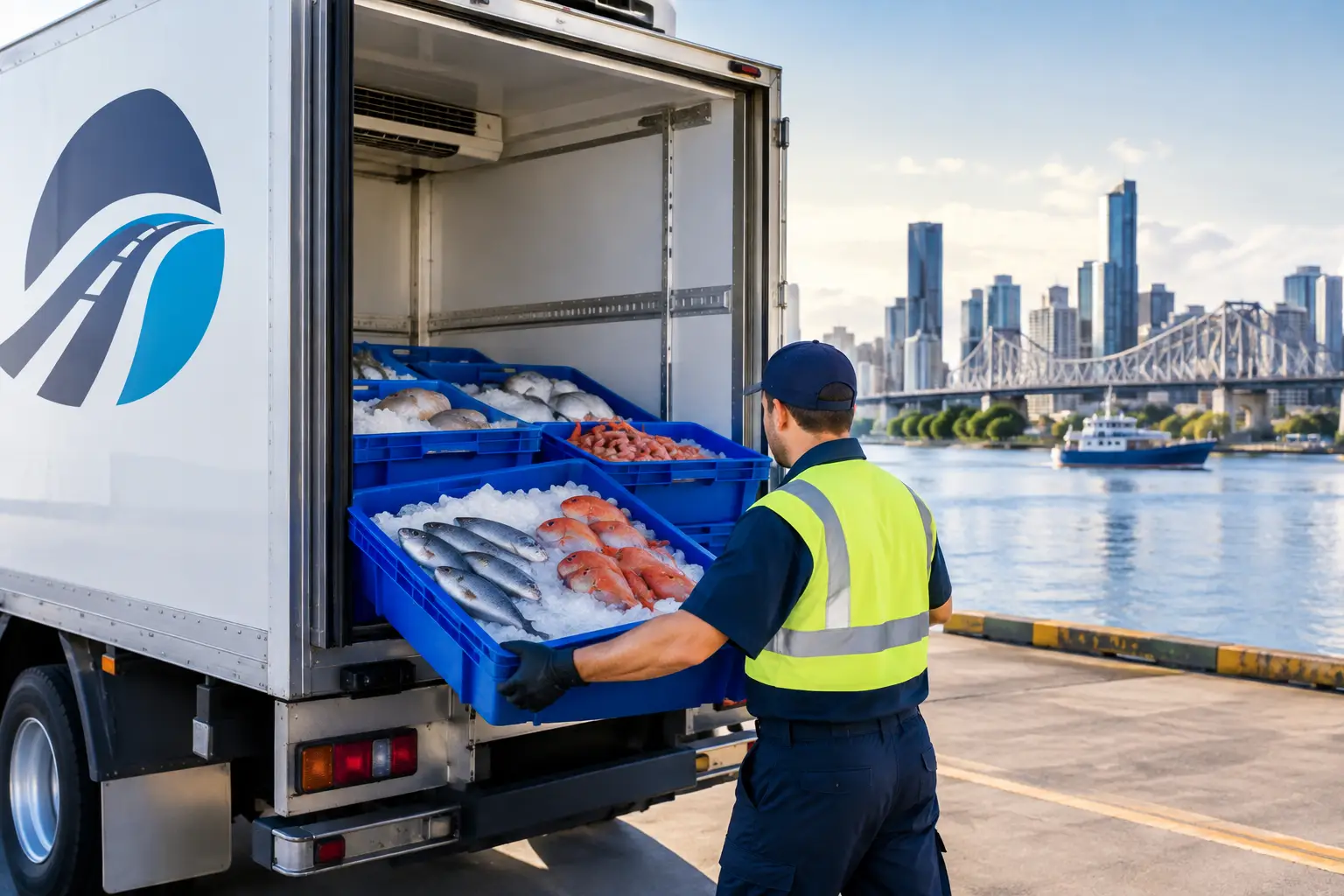
A Brisbane seafood freight example is rarely just a matter of loading cartons and driving to the next depot. A delayed collection, a warm loading dock or an unplanned wait at delivery can affect product quality, shelf life and a customer’s confidence in the supplier. For seafood distributors, the transport job must protect the product from the first scan through to the final handover.
Consider a common South East Queensland run: chilled seafood is collected from a Brisbane processor in the early morning and delivered to several commercial customers before lunch. The freight may include fresh fish portions, shellfish and value-added seafood packed in insulated cartons on pallets. The consignments are time-sensitive, but they do not all have identical handling needs. That is why the job begins with planning, not with the truck arriving at the gate.
Brisbane seafood freight example: planning the run
Before collection, the carrier needs clear information: the number of pallets or cartons, total weight, required delivery times, receiver access and the temperature requirement set by the supplier. A booking that simply says “seafood, urgent” leaves too much room for error. A proper freight plan identifies whether the product is chilled or frozen, whether a tailgate is required, and whether the delivery point has a loading dock, forklift or limited access.
For this example, the processor has six pallets of chilled seafood due at three Brisbane food businesses. Two receivers have morning delivery windows, while the final delivery can be accepted before 1 pm. The truck is scheduled to collect after the seafood has been packed, labelled and moved into the dispatch area. This avoids freight sitting outside refrigeration while paperwork or pallet preparation is completed.
The assigned vehicle is pre-cooled to the required set point before loading.Pre-cooling mattersbecause a refrigerated body is designed to maintain a product temperature, not rapidly pull down warm freight. Loading seafood into a vehicle that has not reached the correct temperature creates an avoidable risk from the outset.
Collection is where product protection starts
At pickup, the driver confirms the consignment details against the booking and checks that the packaging is secure, clean and suitable for transport. Cartons need to be stacked to maintain stability, with enough protection to prevent crushing or movement during braking and turns. If pallets are unstable, wet, damaged or poorly wrapped, the issue should be raised before the vehicle leaves.
The driver also needs to minimise the time the rear doors are open. Every minute at the dock allows outside air into the load space, particularly on a humid Brisbane day. Efficient loading is not about rushing staff. It is about having freight ready, using the right equipment and placing pallets in the planned delivery order.
In this case, the pallet for the first customer is positioned for easy access. The final stop is loaded further forward. That reduces handling at each delivery and means the driver does not need to move other pallets around to reach the right freight. Less handling means fewer opportunities for damage, delay or a temperature rise.
Temperature checks need to be meaningful
Temperature monitoring should support the customer’s product specification and transport plan. For chilled seafood, the required range is set by the supplier, product type and food safety controls. Frozen product has a different requirement and must remain frozen throughout the journey. A reliable carrier does not treat every cold load as though it has the same set point.
The vehicle’s monitored refrigeration equipment provides a record of conditions during transport. That record is useful when customers need assurance that their freight was carried as required, but monitoring alone is not enough. It must be paired with sensible loading practices, controlled door openings and prompt delivery.
The route must allow for real conditions
The direct route is not always the best route. Morning traffic, roadworks, school zones and delivery restrictions can all affect a run across Brisbane. A capable dispatcher plans for these conditions and builds enough time into the schedule for safe travel and proper handover, rather than relying on drivers to make up lost time on the road.
For the first two stops, the driver has booked delivery windows and known access arrangements. The truck arrives, presents the freight documentation and unloads the correct palletusing the tailgatewhere no dock is available. The receiver checks the consignment, signs the paperwork and moves the product into its own cold storage without delay.
The third customer is different. Its receiving area is shared with other suppliers, and a short wait is possible. This is where communication matters. If the driver expects a delay, the operations team can contact the receiver, confirm an available time and keep the vehicle closed until unloading can proceed. Leaving seafood on a tailgate or in a warm receiving area while staff look for space is not an acceptable workaround.
Delivery windows and seafood quality are connected
A delivery window is often treated as an administrative requirement. For seafood, it is also part of product protection. The sooner the product moves from the supplier’s controlled storage to the receiver’s controlled storage, the fewer variables affect its condition.
That does not mean every load needs an express, single-drop service. Multi-drop freight can be efficient and reliable when it is planned around compatible temperature requirements, realistic travel times and delivery access. It depends on the load size, the product specification, the number of stops and how tightly each receiver controls its intake times.
For a single high-value pallet with a narrow delivery deadline, adedicated runmay be the better choice. For several compatible consignments moving along the same corridor, a carefully scheduled multi-drop run can offer value without compromising handling. The right option should be clear in the quote, including any after-hours, weekend or specialised equipment requirements.
What can go wrong on this type of run?
Most seafood freight problems are preventable, but they are rarely caused by one dramatic failure. More often, small gaps compound: freight is not ready at collection, a pallet is added after the route is planned, delivery access is not explained, or a receiver is unavailable when the truck arrives.
Temperature risk can also increase when businesses assume the truck will solve every issue. Refrigerated transport supports the cold chain, but it cannot correct product that was packed warm, packaging that has failed, or a long delay before the freight is loaded. Clear responsibilities between supplier, carrier and receiver are essential.
A practical transport partner will ask questions before collection. Is the freight chilled or frozen? What is the required set point? Is there a strict delivery time? Does the site need a tailgate? Are there booking references, gate instructions or receiving contacts? These details may feel routine, but they protect the job when the day becomes busy.
What a dependable seafood carrier should provide
For seafood freight, reliability is visible in the operating details. The vehicle should be clean and suitable for food transport. Drivers should understand site safety and product-handling expectations. Temperature-controlled equipment should be monitored, and the carrier should be able to respond when a collection time or delivery window changes.
SAFE FOOD accreditation is also relevant for businesses moving sensitive food products. It demonstrates that food safety controls form part of the transport operation rather than being an afterthought. Just as importantly, the carrier should quote clearly. Customers need to know the applicable drop, pallet, hourly or specialised service charges before the vehicle is dispatched.
BFC Logistics supports chilled, frozen and dry freight movements with monitored temperature-controlled vehicles, trained drivers and flexible delivery options, including overnight and weekend work where the job requires it. For seafood businesses, that flexibility can help protect dispatch schedules when normal trading hours do not match customer receiving times.
The useful lesson from this Brisbane seafood freight example is simple: freight quality is protected by a chain of good decisions. Start with accurate booking information, load into a prepared vehicle, plan realistic delivery windows and keep communication active until the receiver has the product safely in cold storage. When those basics are handled properly, seafood arrives as the supplier intended – and the transport provider becomes a dependable part of the operation.
NEED TEMPERATURE-CONTROLLED TRANSPORT?
Talk to BFC about your freight, delivery window and temperature requirements.
Request a quote