
How Are Freight Temperatures Recorded on Delivery?
See how freight temperatures are recorded during cold-chain deliveries, with sensors, data logs, alarms and clear proof at handover for food freight.
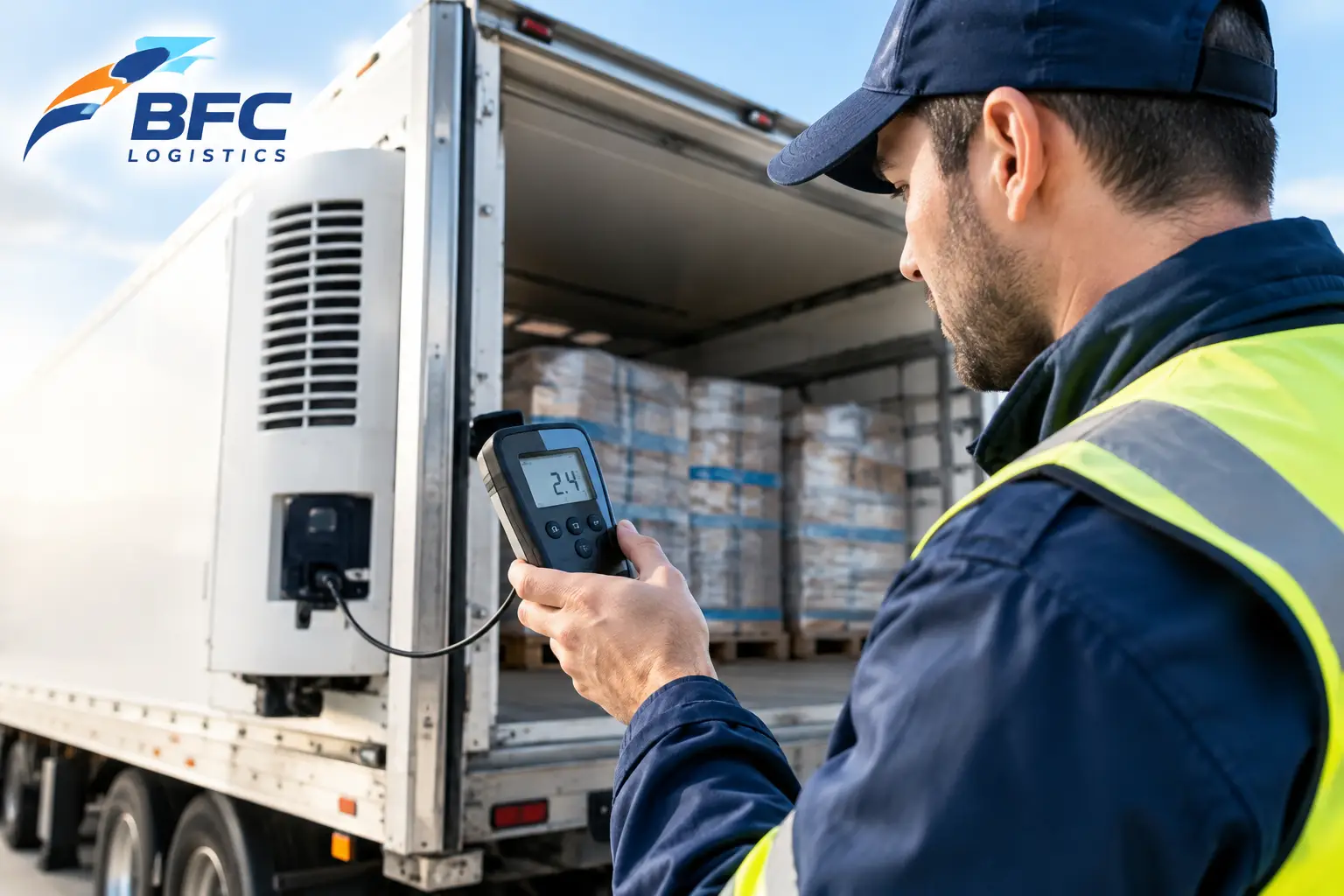
A chilled truck can arrive exactly on time and still create a costly problem if the product temperature cannot be verified. So, how are freight temperatures recorded? In well-managed temperature-controlled transport, readings are captured with calibrated equipment before loading, during transit and at delivery, creating a clear record of how the freight was protected.
For food, dairy, poultry, meat and frozen goods, temperature records are not simply a paperwork exercise. They help confirm that the agreed transport conditions were maintained, support food safety requirements and give receivers confidence to accept the load. The right method depends on the freight, the required temperature range, the trip length and the customer’s handling procedures.
How freight temperatures are recorded in transit
Most refrigerated freight is monitored through a combination of vehicle-mounted sensors, temperature data loggers and manual checks. Each method has a different purpose. The strongest temperature-control process uses the right mix rather than relying on a single reading.
A refrigerated vehicle has sensors inside the load space that measure air temperature. These sensors feed information to the refrigeration unit or telematics system, allowing the operator or driver to see whether the compartment is holding its set point. On multi-temperature vehicles, each compartment can be monitored separately so chilled and frozen freight can travel under their own required conditions.
Vehicle readings are useful because they show what happened throughout the journey. Depending on the equipment and service arrangement, the system may record temperature at set intervals, such as every few minutes, and retain the information as a downloadable report. This gives the transport provider and customer a time-stamped temperature history rather than a single result at the end of the trip.
However, air temperature is not always the same as product temperature. A truck may be operating correctly while product that was loaded too warm takes time to pull down. Equally, opening doors for a delivery can briefly affect air temperature without meaning the product itself has become unsafe. That is why loading checks, sensible loading practices and clear exception procedures matter.
The main temperature-recording methods
Vehicle sensors and refrigeration unit records
Refrigerated trucks commonly record return-air and supply-air temperatures. Supply air is the cooled air leaving the refrigeration unit, while return air is the air returning from the load area. Together, these readings give a practical view of whether chilled air is circulating as expected.
The record may also show refrigeration status, set point, door openings and defrost cycles. This context is valuable when reviewing a variation. A short temperature change during a scheduled defrost or a brief door opening needs to be assessed differently from a sustained rise caused by equipment failure or an extended delivery delay.
Data loggers placed with the freight
A data logger is a small device placed in the load, on a pallet or within a carton arrangement. It records temperature at programmed intervals and can be read after delivery or, with connected devices, viewed during transit.
Loggers are particularly useful for sensitive food freight or longer trips where the customer needs a detailed record close to the product itself. Placement is critical. A logger positioned beside an evaporator outlet may read colder than one in the centre of a pallet, while one placed near a door may show the impact of frequent unloading. The placement plan should reflect the customer’s risk points and the load configuration.
Some loads use more than one logger. This can be appropriate for mixed pallets, large consignments, different compartments or freight with a known warm spot. More devices provide a broader picture, but they also need to be labelled, recovered and matched to the correct consignment.
Manual temperature checks
Manual checks are often completed at collection and handover using a calibrated probe thermometer, infrared device or fixed display reading. A probe can measure the temperature of a product or between packs where the procedure allows. Infrared devices measure surface temperature, so they are quick and useful for screening but are not always a substitute for a core or between-pack check.
The correct method depends on the product and site requirements. Frozen cartons, chilled dairy, raw poultry and prepared food may each have different acceptance procedures. Drivers should follow the agreed process and record the reading accurately, including the time, location and any relevant observations.
Recording starts before the truck leaves
A reliable temperature record begins before the freight is loaded. The vehicle should be clean, pre-cooled where required and set to the agreed transport temperature. Pre-cooling brings the load space to a suitable condition before the doors are opened for loading. It does not replace loading product that is already within specification.
At collection, the sender may provide product temperature information, loading documentation or specific handling instructions. If freight appears outside the agreed range, damaged, poorly wrapped or unsuitable for transport, the issue should be raised before departure. Continuing without clarification can make it difficult to determine responsibility later.
Loading also affects the readings that follow. Freight needs adequate airflow around and through the load where the vehicle design requires it. Pallets stacked against air outlets, blocked return-air paths or warm freight loaded beside frozen product can all reduce temperature control. The refrigeration unit can only manage the space effectively when the load ispacked and positionedcorrectly.
What a useful temperature record should show
A temperature report is only valuable if it is easy to interpret. For routine freight, records should identify the vehicle or compartment, the date and journey, the relevant set point, the time-stamped readings and any exceptions. Manual records should show who took the measurement, the device used where required, the reading and the point at which it was taken.
For customers managing strict receiving requirements, proof of delivery may also note the delivery time, condition of the freight, seal details where used and any temperature check completed at handover. Clear records reduce disputes because they connect the temperature result with the actual consignment and delivery event.
Calibration is part of this process. Thermometers, probes and sensors need regularchecking and calibrationin line with the business’s quality procedures and customer requirements. An uncalibrated device can create false confidence, which is worse than having no reading at all. Drivers also need to know how to use the equipment properly, keep probes clean and avoid contaminating products during checks.
Responding to temperature variations
A recorded variation does not automatically mean thefreight must be rejected. The right response depends on the actual reading, how long it lasted, the type of product, the customer’s specification and the cause. A brief air-temperature movement during unloading is different from a prolonged failure to hold the required range.
When an issue occurs, the driver or operations team should act quickly: check the refrigeration unit and doors, confirm the reading with an appropriate device, protect the freight from further exposure and notify the relevant contact. The event should be documented, not hidden. A clear record allows the customer to make an informed decision using their food safety process.
This is where responsive transport support matters. For time-critical freight across Brisbane and South East Queensland, delays can quickly affect delivery windows, receiver staffing and product integrity. Access to an operations team that can respond, arrange alternatives where needed and communicate clearly helps contain the problem before it becomes a larger loss.
Why temperature records protect more than the load
Accurate recording protects product quality, but it also protects commercial relationships. Suppliers need confidence that their goods arrive as intended. Receivers need evidence to support acceptance decisions. Logistics teams need practical information when investigating a complaint or reviewing a delivery process.
The best records are not produced for their own sake. They support dependable decisions at every point: whether a truck is ready to load, whether freight can travel together, whether a delivery can be accepted and what action is needed if conditions change. For temperature-sensitive freight, that level of visibility is part of dependable service, not an optional extra.
When booking refrigerated transport, ask how temperatures will be monitored, what records can be supplied and how exceptions are handled. A provider that can answer those questions plainly is better placed to protect your freight from collection through to handover.
NEED TEMPERATURE-CONTROLLED TRANSPORT?
Talk to BFC about your freight, delivery window and temperature requirements.
Request a quote