
How to Prepare Cartons for Tailgate Unloading
Learn how to prepare cartons for tailgate unloading, reduce handling delays and protect chilled, frozen and dry freight at every delivery point on arrival.
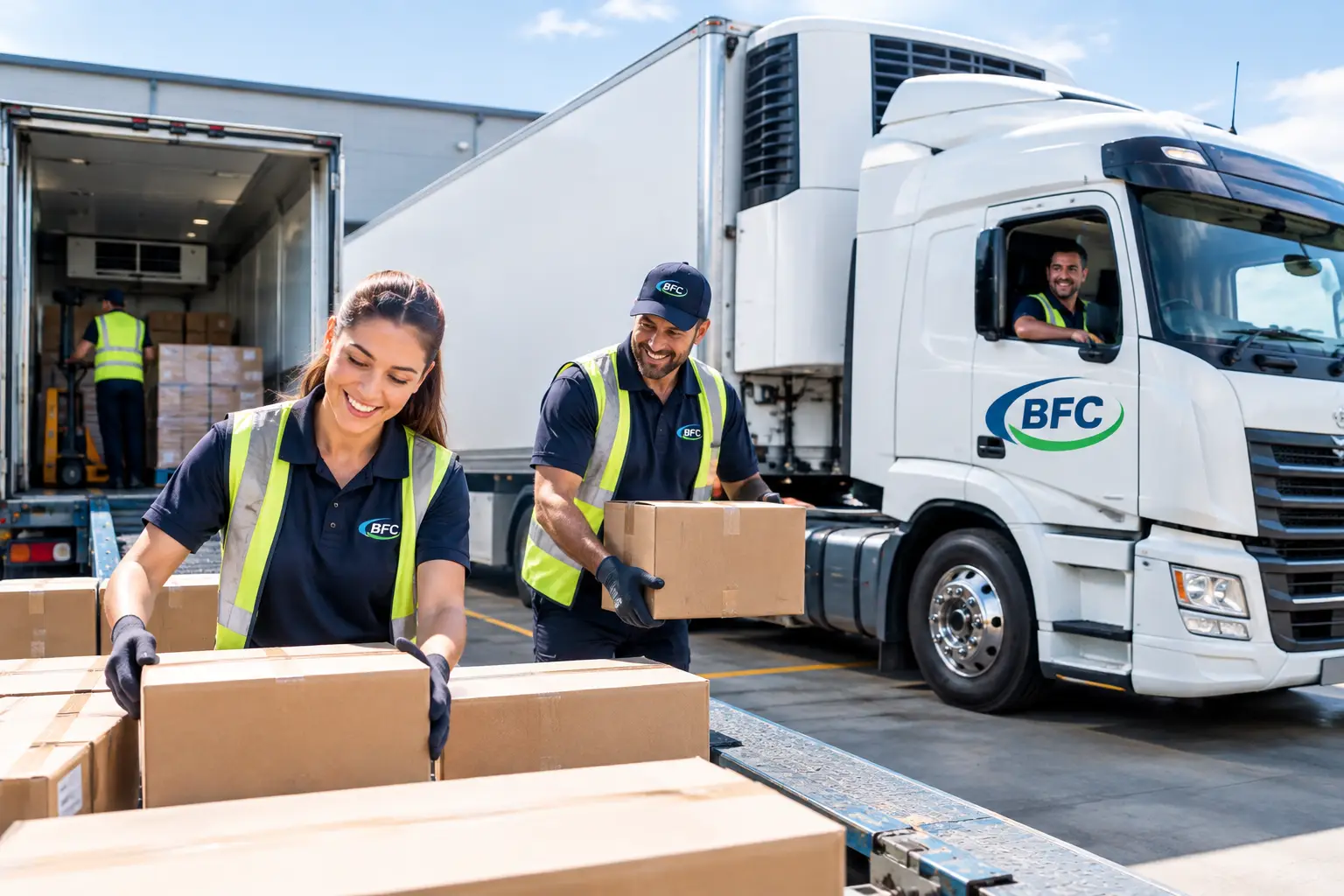
A tailgate delivery can lose valuable minutes before the liftgate is even lowered. Cartons that are unstable, poorly labelled or packed without regard for handling can slow the driver, create safety risks and expose chilled or frozen goods to avoidable temperature changes. To prepare cartons for tailgate unloading properly, the freight needs to be safe to move, easy to identify and ready for the conditions at the receiving site.
For food, dairy, meat, poultry and freezer products, this preparation is part of protecting product integrity. It also helps keep delivery windows on track, particularly where a vehicle has multiple drops or needs to deliver outside standard business hours.
Start with the delivery site, not the carton
Tailgate unloadingis designed for sites without a loading dock or forklift access. That does not mean every location is automatically suitable. Before dispatch, confirm there is a safe, firm and reasonably level area where the truck can stop and the tailgate can operate. A steep driveway, loose gravel, crowded car park or poor lighting can change the unloading plan.
Provide clear delivery instructions when booking. Include the site contact, opening hours, vehicle access restrictions, preferred unloading point and any gate, security or receiving procedures. If the delivery is to a busy warehouse, advise whether the driver needs to report to a dispatch office or wait for a receiving team.
Space matters as much as access. The driver needs room to lower the tailgate, position the freight safely and manoeuvre a pallet jack or trolley where required. If cartons are to be unloaded loose rather than on pallets, ensure the receiving site has staff available to receive them promptly. A driver should not be left holding temperature-sensitive freight on a tailgate while someone searches for space in a cool room.
Prepare cartons for tailgate unloading with handling in mind
A carton can look acceptable at pickup yet fail during transport or unloading if it is too heavy, poorly sealed or unevenly packed. Use cartons that are appropriate for the product weight and expected handling. The base must remain rigid when lifted, and the outer carton should not bow or split when stacked.
Keep individual cartons at a manageable weight for safe manual handling. There is no single weight that suits every task, because the risk depends on carton dimensions, handholds, lifting height, travel distance and the people available to handle it. Where cartons are heavy, awkward or high volume, palletising is generally the safer and more efficient option.
Seal every carton fully with suitable tape. Do not rely on folded flaps, light tape or stretch wrap around individual cartons as the primary closure. Moisture, condensation and cold conditions can reduce the strength of packaging, particularly with refrigerated and frozen freight. If cartons will be exposed to cold-room conditions or condensation, select packaging and tape suited to that environment.
Pack contents so weight is distributed evenly. Empty space inside a carton allows goods to shift in transit, which can crush product, weaken corners and make the carton difficult to stack. Use appropriate internal protection where needed, but avoid overpacking a carton until its sides bulge.
Stack strength determines whether loose cartons are practical
Cartons intended for stacking need strong corners and a flat top surface. Avoid mixing carton sizes randomly, especially where smaller cartons are placed beneath larger, heavier ones. This creates pressure points that can collapse during braking, turning or movement across the tailgate.
If loose cartons are necessary, keep stack heights sensible and build stable square stacks. Do not create tall, narrow columns simply to fit more freight into the vehicle. A lower, stable stack is quicker to unload than a leaning stack that requires repacking at the delivery point.
Forlarger consignments, palletisinggives the driver and receiving team a safer way to handle freight. Use a sound pallet with no broken boards or protruding nails. Keep cartons within the pallet footprint where possible, stack heavier cartons at the bottom, and secure the load so it cannot move during transport. Stretch wrap supports the load, but it cannot correct an unstable stack.
Label every carton for fast, accurate receiving
Clear labels reduce delivery delays and help prevent cartons being sent to the wrong storage area. Each carton should show the delivery address, business name, consignment or purchase order reference, and handling requirements relevant to the product.
For multi-carton consignments, mark the carton count clearly, such as “1 of 12” through to “12 of 12”. This gives the receiving team a quick way to check completeness before the driver departs. It is particularly useful where cartons are unloaded into a busy cool room or distributed between chilled, frozen and dry storage areas.
Apply labels to a visible side of the carton, not only to the top. Cartons are often stacked, wrapped or placed on the tailgate with the top surface obscured. Use labels that remain readable in cold, damp conditions, and remove or cover old shipping labels to avoid confusion.
Where goods have different temperature requirements, separate and identify them clearly before collection. Chilled, frozen and dry freight should not depend on guesswork at the receiving point. A clear product and temperature identification process helps the driver deliver freight efficiently and helps the site move it into the correct storage without delay.
Protect the cold chain before the truck arrives
Temperature-controlled transport works best when freight is ready at therequired temperature before loading. Do not use the vehicle to pull down warm product that has not been properly chilled or frozen beforehand. Loading product at the wrong temperature puts pressure on the cold chain and may affect product quality, shelf life and compliance requirements.
Keep chilled and frozen cartons in suitable temperature-controlled storage until collection. Stage freight as close as practical to the collection time, rather than leaving it in an unrefrigerated dispatch area. The goal is to minimise the time product spends outside controlled storage at both pickup and delivery.
At delivery, make sure the receiving team knows the estimated arrival window and has access to the appropriate cold room or freezer. If a site cannot receive immediately, advise the transport provider before dispatch so an alternative plan can be considered. A short delay may be manageable in some circumstances, but repeated or extended delays increase risk and disrupt the rest of the run.
Temperature monitoring, clean equipment and trained drivers are critical controls, but they work alongside good preparation at both ends of the journey. Freight presentation is not separate from food safety. It is one of the practical controls that supports it.
Make the handover safe for drivers and site staff
Tailgate lifters are valuable where there is no dock, but they require a controlled unloading area. Keep people clear while the platform is moving. Do not step onto or off a raised tailgate, stand beneath it, or overload it beyond its rated capacity. The driver will assess the load, the surface and the immediate work area before unloading.
The receiving team should wear suitable footwear and be ready to move freight from the tailgate without rushing. If cartons are wet, damaged or unstable, raise the issue at handover rather than trying to carry them as normal. Photographing obvious damage and recording it promptly helps all parties assess what happened and protect the integrity of the consignment.
Where a delivery involves several pallets, a difficult access point or a time-critical receiving window, discuss the handling method before booking. Tailgate service is flexible, but the safest approach depends on carton size, total weight, pallet configuration, access conditions and available site equipment.
A practical pre-dispatch check
Before the freight is collected, confirm the cartons are sealed, dry and structurally sound; labels are visible and accurate; temperature requirements are clear; and the load is stacked or palletised safely. Confirm the receiving site can accept the delivery and that the unloading area is accessible for a tailgate truck.
It is also worth checking that the consignee contact will be available at the stated delivery time. A mobile number, correct site instructions and a prepared receiving area can prevent a small delay from becoming a missed delivery window.
BFC Logistics supports businesses across Brisbane and South East Queensland with temperature-controlled freight options, monitored equipment and tailgate-equipped vehicles where site access requires it. Accurate booking information and properly prepared cartons allow the transport team to focus on what matters: moving your freight safely, on time and in the right condition.
Well-prepared cartons make tailgate unloading safer for everyone, faster for the receiving team and more reliable for the customers waiting on your product.
NEED TEMPERATURE-CONTROLLED TRANSPORT?
Talk to BFC about your freight, delivery window and temperature requirements.
Request a quote